
In the modern manufacturing landscape, the implementation of a robust **Industrial Belt Conveyor** is the cornerstone of efficient production. Every factory, regardless of its size, relies on an **Industrial Belt Conveyor** to automate the flow of goods, and choosing the right **Industrial Belt Conveyor** can significantly reduce labor costs. For general transport, the **Flat Belt Conveyor** remains the most popular choice due to its simplicity and versatility. A **Flat Belt Conveyor** provides a smooth continuous surface for boxes and parts, and many assembly lines utilize a **Flat Belt Conveyor** to keep products moving steadily from one station to the next. When dealing with heavy bulk materials like mining ores or construction debris, a standard flat belt is not enough; this is where the **Rubber Belt Conveyor** becomes essential. The **Rubber Belt Conveyor** offers superior durability and traction, making the **Rubber Belt Conveyor** the industry standard for harsh environments. In contrast, lighter industries such as packaging prefer the **PVC Belt Conveyor** because it is lightweight and cost-effective. A **PVC Belt Conveyor** is excellent for non-abrasive goods, and upgrading to a **PVC Belt Conveyor** is often the first step for small businesses automating their lines. For facilities that require frequent cleaning or complex routing, the **Modular Belt Conveyor** is the ideal solution. The **Modular Belt Conveyor** consists of interlocking plastic segments, making repair easy, as you can replace a single link in the **Modular Belt Conveyor** without changing the whole belt. This flexibility is often seen in food processing, where a **Food Grade Belt Conveyor** is mandatory. A **Food Grade Belt Conveyor** must meet strict hygiene standards, and our **Food Grade Belt Conveyor** systems are designed to resist bacterial growth. In applications involving high heat or baking, a **Wire Mesh Belt Conveyor** is utilized instead. The **Wire Mesh Belt Conveyor** allows airflow through the belt, which is perfect for cooling tunnels, and the metal structure of the **Wire Mesh Belt Conveyor** ensures it survives high temperatures. For precise applications like robotic assembly, a **Timing Belt Conveyor** is used for exact positioning. The **Timing Belt Conveyor** has teeth that prevent slipping, ensuring that the **Timing Belt Conveyor** delivers the product to the exact millimeter required. When materials need to be moved up steep gradients, gravity becomes an issue, which is why the **Inclined Belt Conveyor** is necessary. An **Inclined Belt Conveyor** allows for vertical elevation changes, but to prevent fallback, an **Inclined Belt Conveyor** is often equipped with specific enhancements. One such enhancement is the **Cleated Belt Conveyor**, which features raised partitions. The **Cleated Belt Conveyor** actively grips the product, and using a **Cleated Belt Conveyor** ensures loose items don't roll down the line. For even steeper angles or vertical lifting, the **Sidewall Belt Conveyor** is the ultimate engineering solution. The **Sidewall Belt Conveyor** acts like a moving bucket system, and the **Sidewall Belt Conveyor** can transport powders and granules without spillage. In bulk handling, especially for loose earth or grains, the **Troughed Belt Conveyor** is the standard. The **Troughed Belt Conveyor** uses angled idlers to cup the belt, and this shape allows the **Troughed Belt Conveyor** to carry three times more material than a flat belt. Logistics centers require speed and adaptability, which is provided by the **Portable Belt Conveyor**. A **Portable Belt Conveyor** can be wheeled to different docks as needed, making the **Portable Belt Conveyor** a favorite for temporary loading zones. For loading trucks directly, the **Telescopic Belt Conveyor** is the most advanced tool available. The **Telescopic Belt Conveyor** extends into the shipping container, and utilizing a **Telescopic Belt Conveyor** reduces loading time by 50%. Underneath these systems, the **Slider Bed Belt Conveyor** provides a friction-free base for the belt to run on. The **Slider Bed Belt Conveyor** is quieter and smoother than roller versions, and the **Slider Bed Belt Conveyor** is ideal for sorting light packages. For heavy industrial loads, a **Heavy Duty Belt Conveyor** is required to withstand impact. A **Heavy Duty Belt Conveyor** is built with reinforced frames, and a **Heavy Duty Belt Conveyor** can run for years with minimal maintenance. Advanced manufacturing also uses specialized belts like the **Magnetic Belt Conveyor** for moving metal parts. A **Magnetic Belt Conveyor** uses magnets to hold ferrous items upside down or vertically, and the **Magnetic Belt Conveyor** is crucial for scrap metal processing. Conversely, for light paper or plastic sheets, a **Vacuum Belt Conveyor** uses suction to hold the item flat. The **Vacuum Belt Conveyor** ensures that delicate sheets don't fly away, making the **Vacuum Belt Conveyor** essential for printing industries. To track production rates, a **Weigh Belt Conveyor** is integrated into the line. The **Weigh Belt Conveyor** measures the weight of material passing over it in real-time, and a **Weigh Belt Conveyor** provides critical data for inventory control. Ultimately, the performance of any system depends on the **Conveyor Belt Material**. Choosing the right **Conveyor Belt Material**—whether rubber, PVC, or silicone—determines longevity, and we always ensure the **Conveyor Belt Material** is perfectly matched to your specific application.


This is your website preview.
Currently it only shows your basic business info. Start adding relevant business details such as description, images and products or services to gain your customers attention by using Boost 360 android app / iOS App / web portal.
Belt Conveyor in vadodara
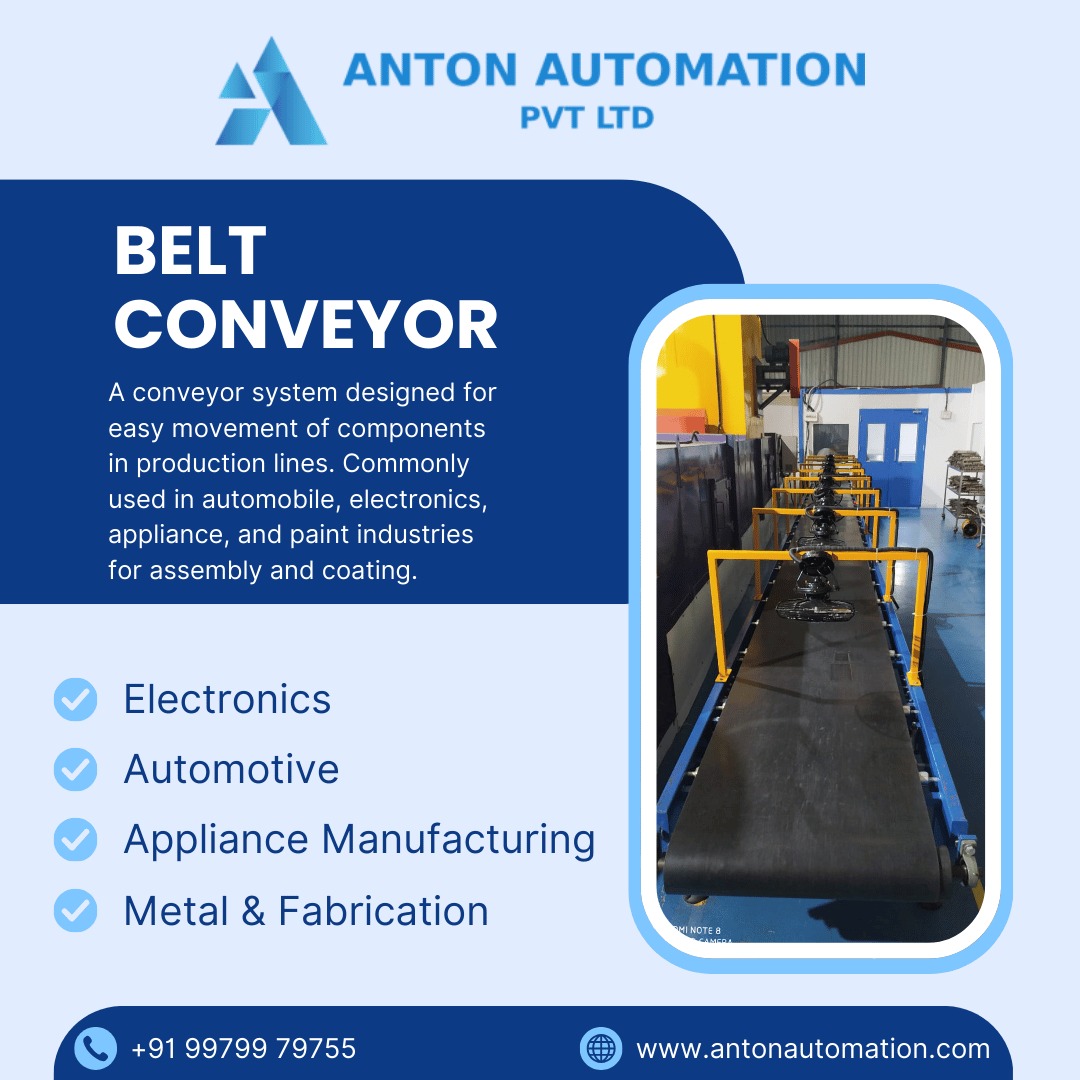
2025-12-30T12:14:06
In the modern manufacturing landscape, the implementation of a robust **Industrial Belt Conveyor** is the cornerstone of efficient production. Every factory, regardless of its size, relies on an **Industrial Belt Conveyor** to automate the flow of goods, and choosing the right **Industrial Belt Conveyor** can significantly reduce labor costs. For general transport, the **Flat Belt Conveyor** remains the most popular choice due to its simplicity and versatility. A **Flat Belt Conveyor** provides a smooth continuous surface for boxes and parts, and many assembly lines utilize a **Flat Belt Conveyor** to keep products moving steadily from one station to the next. When dealing with heavy bulk materials like mining ores or construction debris, a standard flat belt is not enough; this is where the **Rubber Belt Conveyor** becomes essential. The **Rubber Belt Conveyor** offers superior durability and traction, making the **Rubber Belt Conveyor** the industry standard for harsh environments. In contrast, lighter industries such as packaging prefer the **PVC Belt Conveyor** because it is lightweight and cost-effective. A **PVC Belt Conveyor** is excellent for non-abrasive goods, and upgrading to a **PVC Belt Conveyor** is often the first step for small businesses automating their lines. For facilities that require frequent cleaning or complex routing, the **Modular Belt Conveyor** is the ideal solution. The **Modular Belt Conveyor** consists of interlocking plastic segments, making repair easy, as you can replace a single link in the **Modular Belt Conveyor** without changing the whole belt. This flexibility is often seen in food processing, where a **Food Grade Belt Conveyor** is mandatory. A **Food Grade Belt Conveyor** must meet strict hygiene standards, and our **Food Grade Belt Conveyor** systems are designed to resist bacterial growth. In applications involving high heat or baking, a **Wire Mesh Belt Conveyor** is utilized instead. The **Wire Mesh Belt Conveyor** allows airflow through the belt, which is perfect for cooling tunnels, and the metal structure of the **Wire Mesh Belt Conveyor** ensures it survives high temperatures. For precise applications like robotic assembly, a **Timing Belt Conveyor** is used for exact positioning. The **Timing Belt Conveyor** has teeth that prevent slipping, ensuring that the **Timing Belt Conveyor** delivers the product to the exact millimeter required. When materials need to be moved up steep gradients, gravity becomes an issue, which is why the **Inclined Belt Conveyor** is necessary. An **Inclined Belt Conveyor** allows for vertical elevation changes, but to prevent fallback, an **Inclined Belt Conveyor** is often equipped with specific enhancements. One such enhancement is the **Cleated Belt Conveyor**, which features raised partitions. The **Cleated Belt Conveyor** actively grips the product, and using a **Cleated Belt Conveyor** ensures loose items don't roll down the line. For even steeper angles or vertical lifting, the **Sidewall Belt Conveyor** is the ultimate engineering solution. The **Sidewall Belt Conveyor** acts like a moving bucket system, and the **Sidewall Belt Conveyor** can transport powders and granules without spillage. In bulk handling, especially for loose earth or grains, the **Troughed Belt Conveyor** is the standard. The **Troughed Belt Conveyor** uses angled idlers to cup the belt, and this shape allows the **Troughed Belt Conveyor** to carry three times more material than a flat belt. Logistics centers require speed and adaptability, which is provided by the **Portable Belt Conveyor**. A **Portable Belt Conveyor** can be wheeled to different docks as needed, making the **Portable Belt Conveyor** a favorite for temporary loading zones. For loading trucks directly, the **Telescopic Belt Conveyor** is the most advanced tool available. The **Telescopic Belt Conveyor** extends into the shipping container, and utilizing a **Telescopic Belt Conveyor** reduces loading time by 50%. Underneath these systems, the **Slider Bed Belt Conveyor** provides a friction-free base for the belt to run on. The **Slider Bed Belt Conveyor** is quieter and smoother than roller versions, and the **Slider Bed Belt Conveyor** is ideal for sorting light packages. For heavy industrial loads, a **Heavy Duty Belt Conveyor** is required to withstand impact. A **Heavy Duty Belt Conveyor** is built with reinforced frames, and a **Heavy Duty Belt Conveyor** can run for years with minimal maintenance. Advanced manufacturing also uses specialized belts like the **Magnetic Belt Conveyor** for moving metal parts. A **Magnetic Belt Conveyor** uses magnets to hold ferrous items upside down or vertically, and the **Magnetic Belt Conveyor** is crucial for scrap metal processing. Conversely, for light paper or plastic sheets, a **Vacuum Belt Conveyor** uses suction to hold the item flat. The **Vacuum Belt Conveyor** ensures that delicate sheets don't fly away, making the **Vacuum Belt Conveyor** essential for printing industries. To track production rates, a **Weigh Belt Conveyor** is integrated into the line. The **Weigh Belt Conveyor** measures the weight of material passing over it in real-time, and a **Weigh Belt Conveyor** provides critical data for inventory control. Ultimately, the performance of any system depends on the **Conveyor Belt Material**. Choosing the right **Conveyor Belt Material**—whether rubber, PVC, or silicone—determines longevity, and we always ensure the **Conveyor Belt Material** is perfectly matched to your specific application.
2025-12-30T12:14:06


Keywords
- Weigh belt conveyor for production
- Portable conveyor belt for logistics
- Conveyor belt material selection
- Magnetic and vacuum belt conveyor
- Telescopic truck loading conveyor
- Inclined and cleated belt conveyor
- Modular belt conveyor for food industry
- Food grade belt conveyor systems
- Heavy-duty rubber belt conveyor
- Industrial Belt Conveyor in Vadodara
Submit Your Enquiry